

THE WINDOW OF TOLERANCE: A GENTLE GUIDE TO UNDERSTANDING YOUR REACTIONS
Have you ever felt like your reactions were too much — too angry, too numb, too anxious — even when a part of you knew it wasn't logical? Or maybe you’ve noticed moments when you were calm and present, able to respond instead of react. The difference between those states isn't about willpower or personality. Often, it has everything to do with your nervous system.
One of the most helpful tools I share with clients is the concept of the Window of Tolerance — a simple yet powerful framework that helps make sense of our emotional responses, especially in the context of trauma, stress, or overwhelm.
What Is the Window of Tolerance?
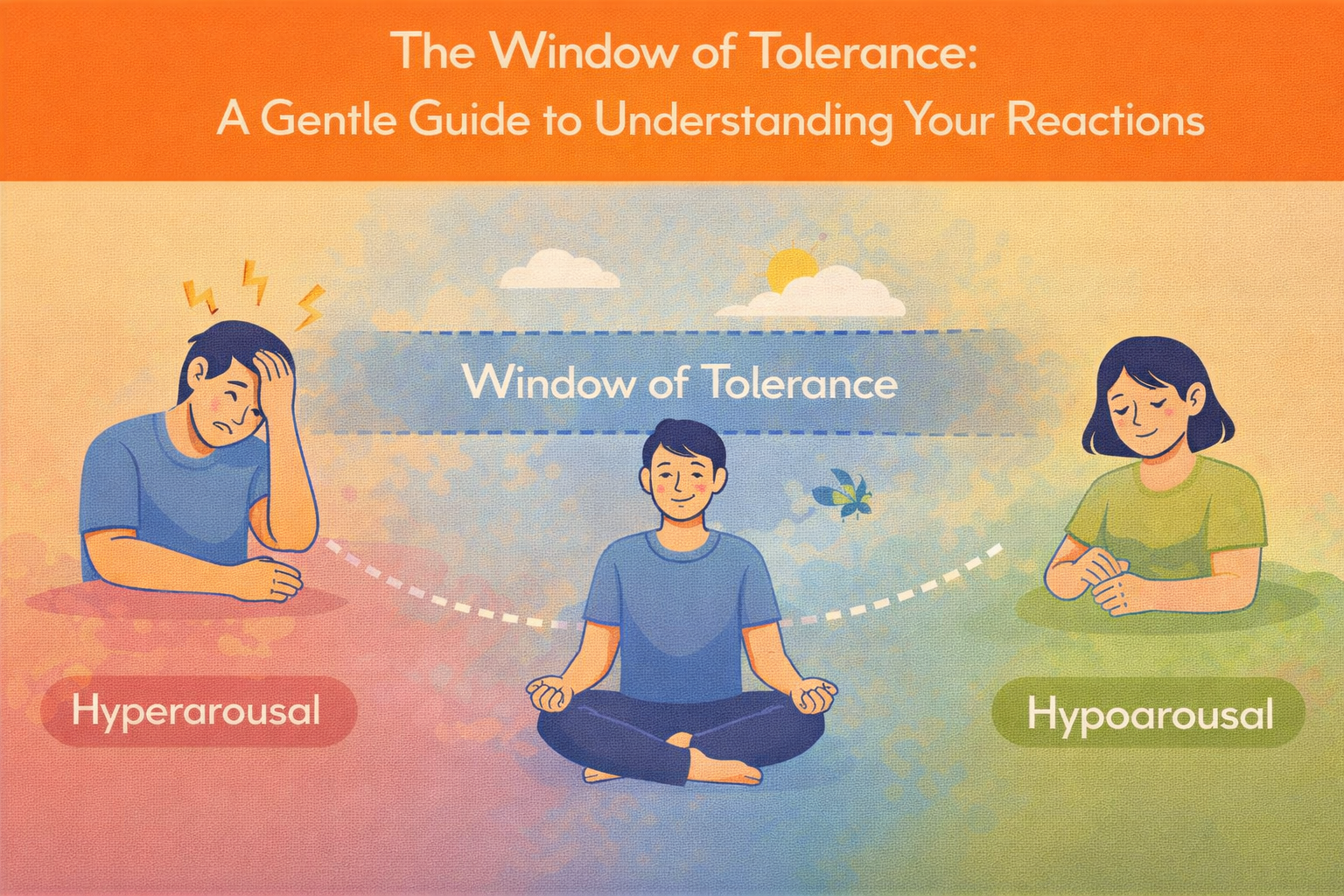
Coined by Dr. Dan Siegel, the Window of Tolerance refers to the optimal zone of arousal where we can function and feel our emotions without becoming dysregulated. Within this window, we feel grounded, present, and able to cope with life’s challenges. We can think clearly, connect with others, and respond rather than react.
But when we’re pushed outside this window — by stress, trauma triggers, relationship conflict, or even everyday overwhelm — our nervous system shifts into survival modes:
- Hyperarousal: This is the “fight or flight” state. You might feel anxious, restless, angry, panicked, or out of control. Your body feels activated, like it’s preparing for danger.
- Hypoarousal: This is the “freeze” or “shutdown” state. You might feel numb, spaced out, disconnected, fatigued, or hopeless. Your body conserves energy to protect you from perceived threat.
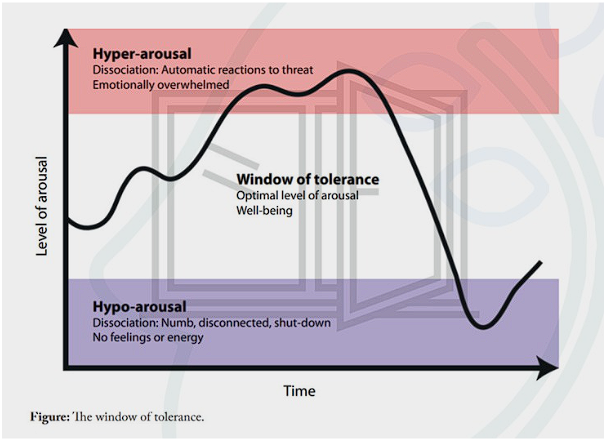
These responses aren’t character flaws. They’re your nervous system doing its job — trying to protect you based on what it has learned.
Why Is This Helpful?
Understanding the Window of Tolerance can help us move from self-judgment to self-compassion. Instead of asking,
“What’s wrong with me?”
we begin to ask,
“What’s happening in my nervous system?”
This shift is profound. It gives us language and a map. It helps us understand why sometimes we can’t think clearly, or why we shut down in conversations, or why we spiral into overthinking. When we know what’s happening inside us, we can begin to work with our nervous system rather than against it.
Trauma and a Narrower Window
People who have experienced trauma — especially chronic or relational trauma — often have a narrower window of tolerance. That means their nervous systems become easily overwhelmed or shut down with triggers that might seem “small” to others. This isn’t about being sensitive or weak — it’s about survival patterns that were once adaptive.
The good news? The window can expand. With time, safety, and regulation practices, it’s possible to build more capacity to stay present even during challenging emotions.
How to Work With Your Window
Here are some gentle ways to begin exploring and widening your window of tolerance:
Notice Your Patterns: Start by observing your body and behavior. When do you feel overwhelmed or shut down? What sensations, thoughts, or environments tend to push you outside your window?
Grounding & Regulation Practices: Simple practices like deep breathing, movement, orienting to your surroundings, or holding something comforting can support your nervous system when dysregulation arises.
Safe Relationships: Co-regulation — feeling safe with another — is a powerful way to come back into your window. That could be with a trusted friend, a pet, a therapist, or even a comforting memory.
Therapy and Somatic Work: Trauma-informed therapy (like EMDR, IFS, or somatic approaches) can help heal the underlying patterns that keep the nervous system in survival mode.
A Gentle Reminder
You are not broken. Your reactions make sense. Your nervous system is doing its best to protect you — even if the strategies it learned no longer serve you today.
The window of tolerance isn’t a fixed place. It’s something we can nurture over time, with patience and care. And every moment you meet yourself with curiosity instead of criticism is a step toward widening your capacity for presence, connection, and healing.