

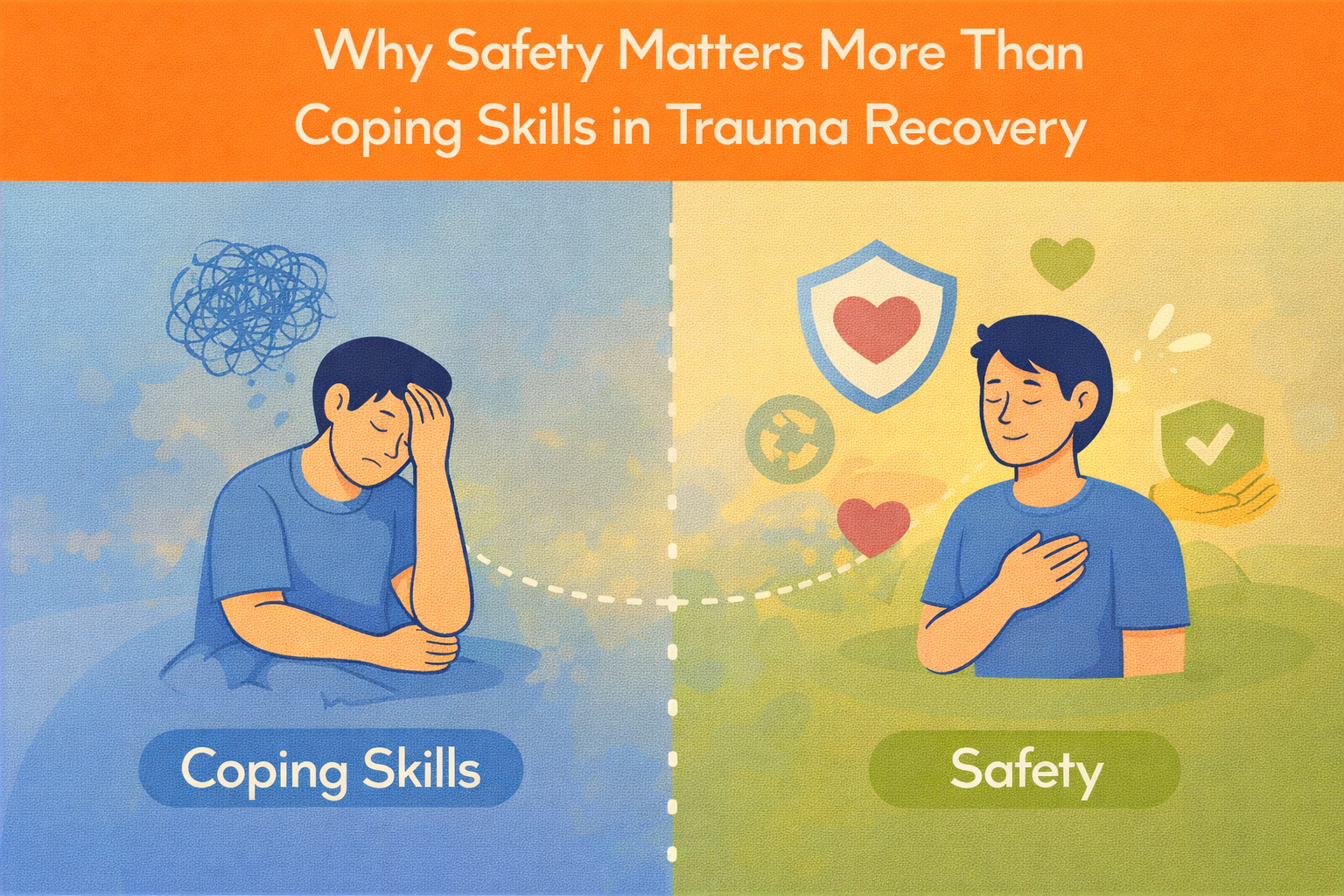
Why Safety Matters More Than Coping Skills in Trauma Recovery
When we think about healing from trauma, many of us instinctively look for coping tools — breathing techniques, grounding exercises, journaling prompts, mindfulness apps. These skills are valuable and supportive, no doubt. But in trauma recovery, there’s something even more foundational than coping strategies: a felt sense of safety.
Without safety — both external and internal — coping tools can feel like band-aids on deeper wounds. They may help in the moment, but they often don’t create lasting change. To truly heal, we need more than skills. We need to feel safe enough to use them.
What Does Safety Mean in Trauma Recovery?
Safety isn’t just about being free from physical danger. In trauma work, safety is the felt experience of being grounded, connected, and present — in your body, your environment, and in your relationships.
Trauma, by its nature, disconnects. It overwhelms the nervous system, fragments the self, and leaves behind a deep imprint of threat. When someone has experienced trauma — especially developmental, relational, or complex trauma — their internal system may stay on high alert, even when nothing is “wrong” on the outside.
That’s why a breathing exercise might not work for someone whose body still believes it’s in danger. It’s not that they’re resisting help — it’s that their system is protecting them the only way it knows how.
Coping Skills Are Helpful… But Limited Without Safety
Coping skills are often taught early in therapy to help people manage symptoms. They might soothe anxiety, slow down spirals, or provide temporary comfort. But without the foundation of safety, these tools can feel like surface-level fixes:
- A grounding technique may feel useless if dissociation is protecting someone from a deeper emotional wound.
- A body scan may trigger more distress if the body feels unsafe to inhabit.
- Positive affirmations may not land if trust or self-worth were ruptured by trauma.
In these moments, people often blame themselves:
“Why isn’t this working for me?”
“I should be able to manage this by now.”
But the truth is — healing doesn't start with tools. It starts with safety. And safety is not taught. It’s built, slowly, over time.
How Do We Rebuild Safety?
Here are a few key elements that support the rebuilding of safety in trauma recovery:
- Relational Safety: Healing often begins in a relationship — a therapist, a trusted friend, a chosen family member. Feeling seen, believed, and accepted can start to repair the wounds of neglect, betrayal, or abuse.
- Body-Based Awareness: Somatic approaches help clients reconnect with their bodies in gentle, titrated ways. It’s not about forcing embodiment, but inviting small moments of noticing what feels okay, or neutral, or tolerable.
- Choice and Autonomy: Many traumatic experiences involve a loss of control. In recovery, being given choices — in therapy and in life — helps rebuild agency and trust in oneself.
- Creating Safe Environments: This includes both physical spaces (calm, private, supportive surroundings) and emotional ones (spaces where you don’t have to perform, explain, or shrink).
From Surviving to Healing
When someone feels safe — even briefly — their nervous system begins to shift. The body softens. The mind opens. Emotions become more tolerable. And then, coping tools can truly begin to work.
Not because they’re magic, but because the inner terrain has changed.
Healing from trauma isn’t just about learning how to cope. It’s about learning how to live again — how to feel safe enough to rest, connect, express, and be. And that kind of healing requires more than skills. It requires safety, compassion, and time.
A Final Note
If you’re on a healing journey and find that tools or techniques aren’t “working,” it doesn’t mean you’re doing something wrong. It might just mean your system needs safety first. That is not failure — it’s wisdom. And honoring that need is one of the most profound steps you can take toward real, lasting healing.