

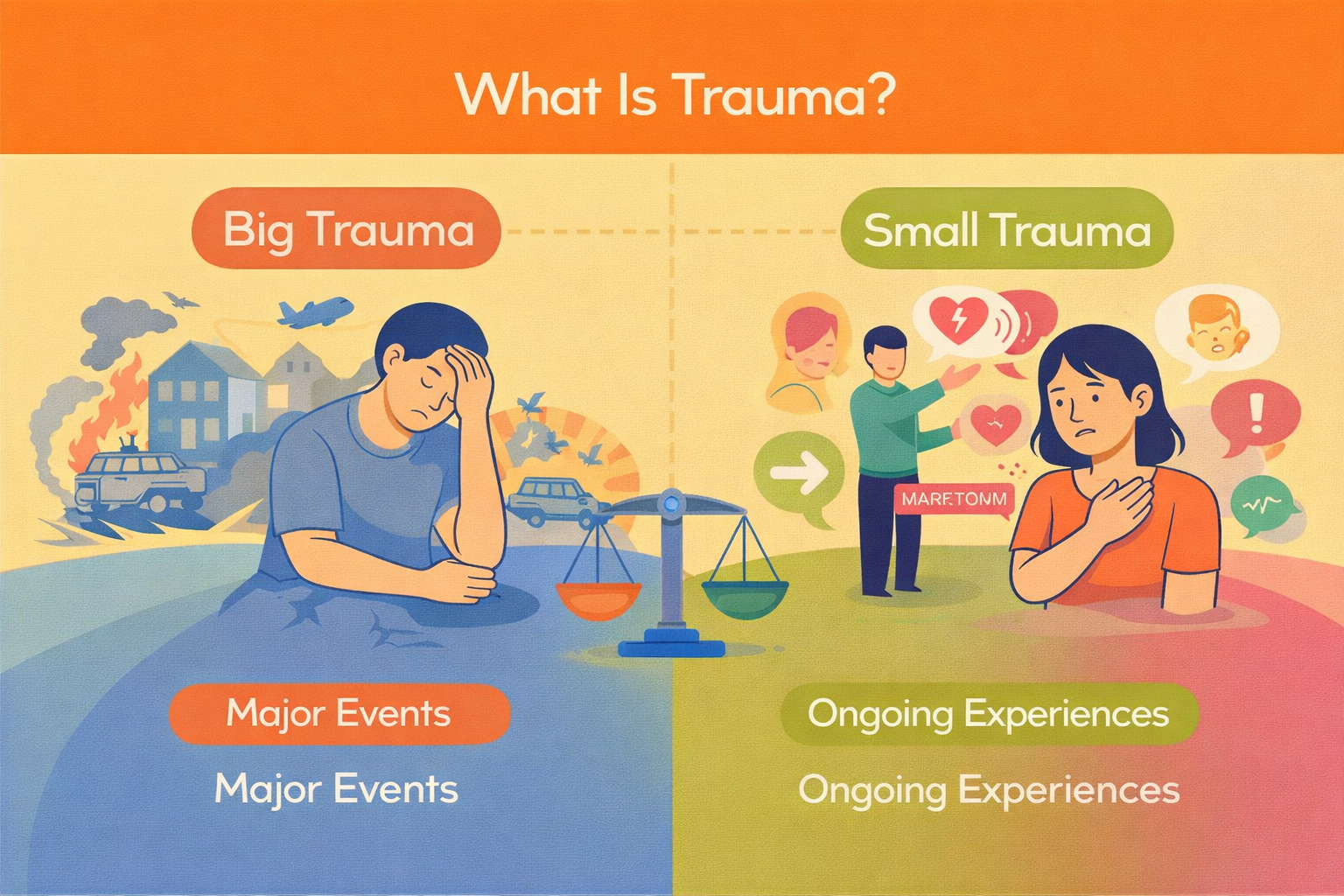
TRAUMA : BIG TRAUMA AND SMALL TRAUMA
What Is Trauma?
Trauma occurs when an individual experiences an event that is deeply distressing or disturbing, to the point where it challenges their capacity to manage and process the emotions and reactions that follow. It can have both short-term and long-term effects on an individual’s mental, emotional, and physical well-being.
At its core, trauma is an emotional injury, it is what happens within us. While trauma is often linked with physical harm, it can also result from psychological or emotional pain. It may manifest in various ways, from physical symptoms like headaches or fatigue to emotional responses such as anxiety, depression, numbness, or even dissociation.
Types of Trauma: Big Trauma and Small Trauma
Trauma is not one-size-fits-all. The intensity and duration of traumatic events can vary, leading to the classification of trauma into different categories. In general, trauma is often categorized into big trauma and small trauma, depending on its impact on an individual.
Big Trauma (Major Trauma)
Big trauma, or major trauma, typically refers to experiences that involve severe emotional, physical, or psychological harm. These are often life-threatening or significantly alter an individual’s sense of safety, stability, or self-identity. Major trauma tends to leave deep emotional scars that require substantial time and therapeutic intervention to heal.
Types of Big Trauma:
- Physical Abuse: This includes assaults or violent attacks that lead to physical injury, such as domestic violence, assault, or battery.
- Sexual Abuse: Any unwanted sexual experience, including molestation, rape, or harassment, can lead to significant emotional and psychological trauma.
- Loss of a Loved One: The sudden death of a family member or close friend can be devastating, causing deep grief and emotional pain that can evolve into long-term trauma.
- Natural Disasters: Events like earthquakes, hurricanes, or floods can leave lasting emotional scars, particularly when individuals are displaced or lose loved ones in the disaster.
- Near-Death Experiences: Surviving an accident where there is a high chance of death or serious injury can trigger post-traumatic stress disorder (PTSD) or long-term anxiety.
- War and Combat Exposure: Experiencing violence in war zones or witnessing death and destruction can cause profound psychological trauma, including PTSD, depression, and survivor’s guilt.
- Childhood Abuse or Neglect: Emotional, physical, or sexual abuse during childhood can severely impact development and lead to long-lasting emotional trauma.
Small Trauma (Minor Trauma)
Small trauma refers to less severe or less intense experiences that still result in significant emotional distress but are generally considered manageable or less overwhelming than big trauma. Small trauma might be fleeting or occur in situations where the individual feels emotionally hurt or challenged but doesn’t experience a major disruption to their overall life.
Types of Small Trauma:
- Emotional abuse: It involves the use of manipulation, criticism, or controlling behaviors to undermine a person's confidence and sense of self. Over time, this type of abuse erodes self-esteem, causing lasting psychological harm and feelings of worthlessness or fear.
- Gaslighting: It is a form of emotional manipulation that subtly erodes a person's sense of reality, leading to self-doubt and confusion. Over time, these small, repetitive actions can accumulate, causing lasting emotional distress and trauma.
- Criticism: When frequent or harsh, can subtly undermine a person's confidence and self-worth, especially if it targets their character rather than specific behaviors. Over time, this can lead to self-doubt, anxiety, and emotional distress, accumulating as a form of small trauma.
- Manipulation: Manipulation involves subtly controlling or influencing someone's emotions, thoughts, or actions for personal gain, often causing the victim to feel confused or insecure. Over time, it erodes trust and self-esteem, resulting in emotional harm.
- Breadcrumbing: Breadcrumbing is when someone gives sporadic, minimal attention or affection to keep another person interested without real commitment. This leads to emotional uncertainty, leaving the victim feeling neglected and unimportant.
- Love Bombing: Love bombing involves overwhelming someone with excessive affection or attention to gain control or influence them, creating an unhealthy dependency. It can result in emotional burnout and confusion once the intensity fades, leading to trust issues and insecurity.
- Bullying or ragging: It involves persistent humiliation, verbal abuse, or physical intimidation, which can leave the victim feeling powerless and degraded. These experiences chip away at self-worth and cause lasting emotional scars, leading to anxiety, depression, and trust issues.
- Having narcissistic parents or partners: They often prioritize their own needs over others, disregarding boundaries and emotions, which can leave the victim feeling neglected or unworthy. Over time, this creates emotional instability and low self-esteem, contributing to ongoing psychological distress.
- Disappointments: Situations where things don’t go as planned (e.g., failing a test, losing a job, or not achieving a personal goal) can cause emotional distress and feelings of disappointment, guilt, or shame.
- Rejection: Experiencing rejection in relationships, whether personal, romantic, or professional, can feel deeply hurtful, though it may not result in lasting trauma.
- Minor Accidents: While not life-threatening, minor accidents like falls, sprains, or injuries can still lead to temporary emotional distress and feelings of vulnerability or fear.
- Embarrassment or Public Humiliation: A humiliating event, such as making a mistake in public or being laughed at, can create lasting emotional wounds, especially in a socially sensitive person.
- Breakups or Relational Conflicts: While ending a relationship can be painful, the emotional impact of a breakup can feel traumatic for some individuals, particularly if it is sudden or unexpected.
- Moving to a New City or Home: A major life transition like changing cities, schools, or homes can be stressful and unsettling, especially for those with deep emotional connections to their previous environment.
- Social Rejection or Isolation: Being excluded from a group or activity can be painful, especially if it’s by close friends or peers. The emotional impact of feeling isolated or not belonging can lead to sadness, loneliness, or even a diminished sense of self-worth.
- Work-Related Stress: Constant work pressure, unreasonable deadlines, lack of recognition, or feeling unappreciated at work can lead to emotional exhaustion, burnout, and anxiety.
- Family Disputes or Arguments: Intense or ongoing conflict within the family, such as fighting between parents or disagreements between siblings, can create an emotionally charged environment. This kind of turmoil can still cause stress, anxiety, or feelings of being emotionally unsafe.
- Financial Stress or Setbacks: Financial difficulties, such as job loss, unexpected expenses, or falling behind on bills, can create anxiety and uncertainty. They can still create a sense of fear, helplessness, and instability.
- Minor Health Issues: Illnesses or health conditions that aren’t life-threatening but cause persistent discomfort or disruption to daily life (like a chronic cough, back pain, or frequent headaches) can still lead to frustration and emotional distress.
- Divorce or Separation: The end of a romantic partnership, especially when it involves betrayal, heartbreak, or unresolved emotions, can feel traumatic. The emotional toll of divorce, separation, or the breakdown of a long-term relationship is significant, leading to grief, loneliness, and anxiety.
- Failure to Meet Expectations: Experiencing disappointment when goals or expectations are not met can be frustrating and lead to feelings of inadequacy or regret.
- Losing a Pet: The loss of a beloved pet can be a form of small trauma, particularly for individuals who are emotionally attached to their pets as family members. The grief of losing an animal companion can be profound and affect one’s emotional health.
- Injury or Surgery: A minor injury or medical procedure can still result in psychological distress. This includes the fear of pain, the uncertainty of recovery, or even the temporary loss of independence while healing.
- Conflict with Friends or Social Groups: Misunderstandings, disagreements, or falling out with friends can cause emotional discomfort. Feeling betrayed, misunderstood, or left out of social gatherings can lead to feelings of sadness, anxiety, or hurt.
- Embarrassment or Social Blunder: A public mistake or embarrassing moment, like tripping in front of people, making an awkward comment, or having something personal exposed unexpectedly, can trigger feelings of shame or self-doubt.
- Academic or Performance Pressure: Struggling to meet academic or performance expectations, whether in school, college, or during any personal learning journey, can result in feelings of anxiety, failure, or self-doubt.
- Feeling Overlooked or Undervalued: Being ignored in social situations or feeling invisible in professional settings can create emotional discomfort. This may include situations where an individual feels their opinions or contributions are not recognized, leading to feelings of isolation.
- Minor Setbacks in Personal Growth: Encountering small setbacks in personal development—whether it’s a slip in a fitness regimen, failed diet plan, or a creative project that doesn’t go as planned—can feel disappointing and discouraging, even if the stakes are relatively low.
- Seeing Unpleasant or Disturbing Media: Watching something disturbing or violent in the media, such as news about a tragedy or graphic content on social media, can cause emotional distress. While not as severe as a personal traumatic event, graphic imagery can still affect emotional well-being and trigger negative thoughts or anxiety.
- Moving from Childhood to Adulthood: The transition from adolescence to adulthood (e.g., going to college, starting a career) can create feelings of uncertainty, fear, or self-doubt. This period of change can be filled with challenges in managing expectations, independence, and the pressures of growing up.
Frequent small traumas, like constant criticism, emotional abuse, or subtle manipulations, can gradually accumulate and impact our mental and emotional health. Over time, these experiences can erode our self-esteem, create feelings of anxiety, and make it harder to trust our perceptions and relationships, leading to long-term emotional distress. The ongoing nature of these "small" traumas can create a pervasive sense of insecurity, self-doubt, and emotional exhaustion, ultimately affecting our overall well-being and ability to form healthy connections.