

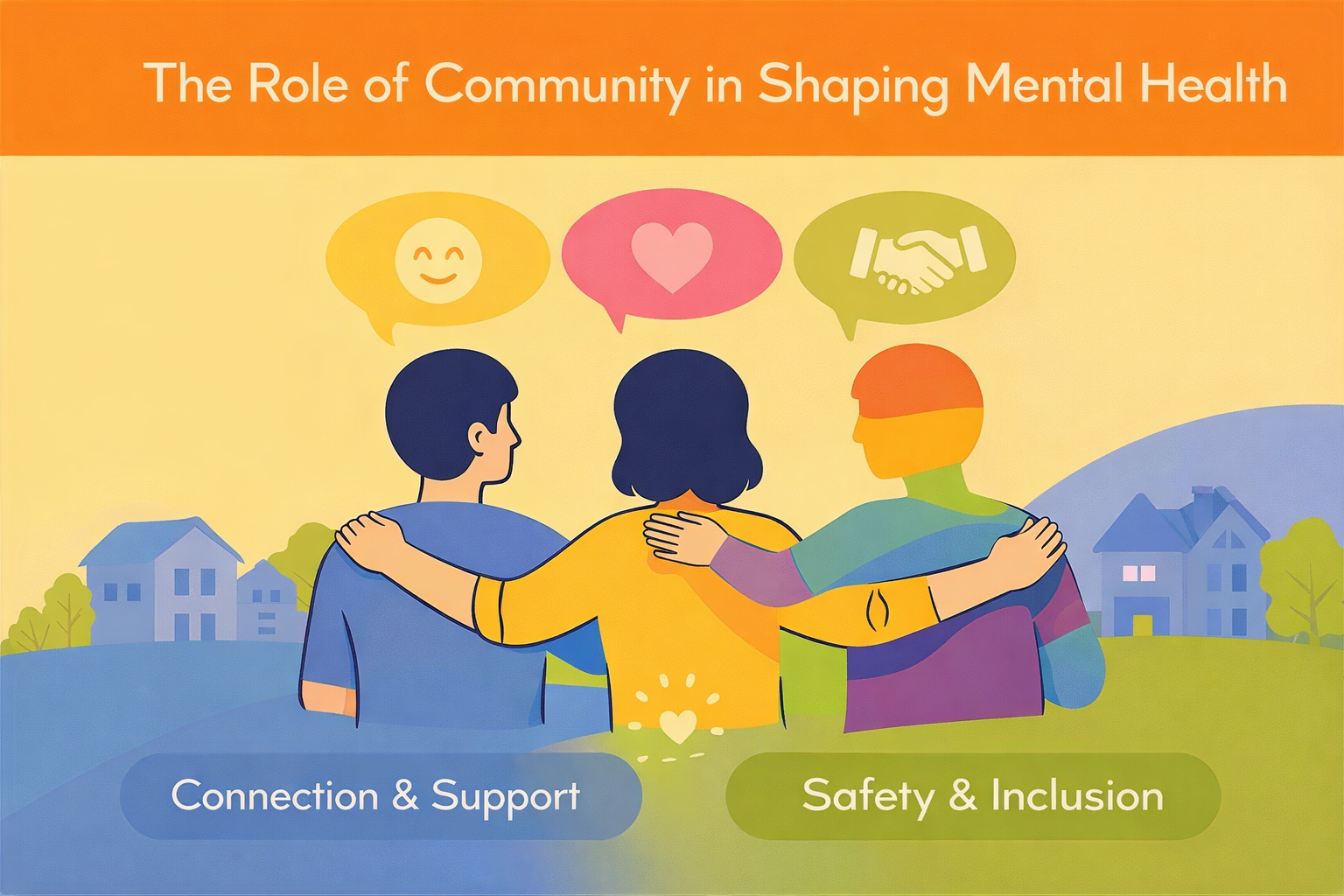
The Role of Community in Shaping Mental Health
Have you ever noticed how a single kind word can brighten a heavy day or how silence and judgment can make struggles feel unbearable? Mental health is often described as a personal journey, a private landscape of thoughts and emotions. But in reality, none of us move through that landscape alone. The people and spaces that surround us- our families, friends, workplaces, and neighborhoods, quietly shape the way we experience life. They influence how we cope with stress, how safe we feel to share our struggles, and even how we see ourselves.
Human beings are wired for connection. From the comfort of a friend’s understanding to the sense of identity found in a group that “gets” us, belonging can be a powerful buffer. A supportive community can feel like a soft landing, offering encouragement when we falter and reminding us that we don’t have to carry our burdens alone. Yet the opposite is also true. Stigma, judgment, or a culture of silence can create invisible walls, making it harder to reach out and leaving us isolated even in a room full of people.
When we begin to see mental health as something shaped not just by our inner world but also by the networks around us, a new truth emerges: our communities hold immense potential to heal or to harm. Understanding this connection isn’t just insightful; it’s an invitation to build spaces where compassion, openness, and shared humanity can thrive.
The Subtle Power of Community
Our mental health is often influenced in ways we don’t immediately notice. A late-night conversation with a friend, a reassuring smile from a colleague, or even a shared laugh with a neighbor can soften life’s edges. These seemingly small interactions tell us we belong- that we are seen and valued. Belonging is more than just being included; it is the feeling of being held by a network that accepts us. Research shows that this sense of connection reduces stress, boosts resilience, and even improves physical health.
Communities, whether they are families, friend groups, workplaces, or neighborhoods, provide more than companionship. They create a shared identity, a sense of “we” that helps us make meaning of our experiences. When we feel understood and supported, we are more likely to talk openly, seek help when we need it, and recover from setbacks with greater strength.
The Light and Shadow of Social Ties
But every community carries both light and shadow. Supportive connections can nurture growth, while unhealthy ones can deepen wounds. Families with open communication can be a source of comfort, but families that dismiss emotions or enforce rigid expectations can make it harder to express vulnerability. Friendships can offer belonging, but they can also become draining when judgment or competition creeps in.
Cultural norms also play a powerful role. In some communities, mental health struggles are met with silence or stigma, framed as weakness rather than a human experience. This can leave people feeling ashamed, making them hesitant to seek help. Workplaces, too, can either uplift or harm. A culture that values endless productivity over well-being can quietly erode mental health, while one that encourages empathy and balance can give employees a vital sense of safety.
The Cost of Disconnection
Isolation is more than physical distance- it’s the feeling of being unseen or misunderstood. Even in crowded cities or busy offices, people can feel profoundly alone when they lack emotional connection. Chronic isolation is linked to higher rates of depression, anxiety, and even physical illness. When stigma or exclusion closes the door to understanding, individuals often retreat further inward, carrying their pain in silence.
This is where therapy can become a steady anchor. In the absence of supportive communities, therapy offers a space of unconditional acceptance, a place where one’s experiences are validated rather than dismissed. A therapeutic relationship can help rebuild trust, offer coping strategies, and create a sense of being deeply heard. For many, therapy becomes the bridge back into connection, giving them the courage to reach out again to others and reminding them that they don’t have to carry their struggles alone.
Recognizing the impact of disconnection reminds us why supportive communities matter so deeply. They are not a luxury or an extra- they are a basic human need.
Creating Communities that Heal
If community shapes mental health, then we each hold the power to make our circles more supportive. It begins with simple, everyday actions: checking in on a friend, listening without judgment, or sharing our own experiences to break the silence. Open conversations can chip away at stigma and remind others that they are not alone.
But beyond individual efforts, building truly supportive spaces means making them inclusive. Communities thrive when diversity is embraced, when people of different backgrounds, identities, and experiences feel safe to show up as themselves. This includes actively creating spaces where individuals from the marginalized communities are respected, heard, and celebrated. For many, inclusive communities are not just comforting; they are vital for survival and mental well-being.
Support groups also play a unique role here. Whether it’s a group for caregivers, survivors of trauma, LGBTQIA+ youth, or people navigating grief, these spaces allow individuals to connect over shared experiences. They offer understanding that is both specific and profound, reducing the loneliness that comes with believing “no one else will get this.” These groups, whether in-person or online, remind us that connection can be found in unexpected places, and that healing often grows stronger when stories are shared within safe, intentional circles.
A Collective Invitation
When we nurture supportive families, friendships, workplaces, and neighborhoods, we create more than connection- we build resilience. Communities that embrace openness, inclusivity, and acceptance become places where healing is possible, where individuals can feel held even in their hardest moments.
Therapy, too, has its place in this larger picture. While it offers a safe and validating space for individual healing, its ripple effect often extends outward- helping people return to their communities with greater courage to connect, to listen, and to show compassion.
Mental health will always have a personal dimension, but it is also profoundly collective. Each act of kindness, each inclusive space created, and each conversation that replaces silence with understanding strengthens the invisible threads that tie us together. In the end, a healthier world begins not only within ourselves, but also between us.
If you’re wondering where to begin, remember that building healthier communities doesn’t always require big gestures. Sometimes it’s the small, consistent acts of care and inclusion that leave the deepest mark. Here are a few ways to start:
- Check in, genuinely. A simple “How are you really doing?” can open doors for conversations that matter.
- Use inclusive language, support LGBTQIA+ friends, and make sure everyone feels safe to be themselves.
- Share your story. Talking about your own struggles normalizes mental health conversations and helps others feel less alone.
- Educate & advocate. Share resources, encourage workshops, or push for mental health initiatives in schools, workplaces, and local networks