

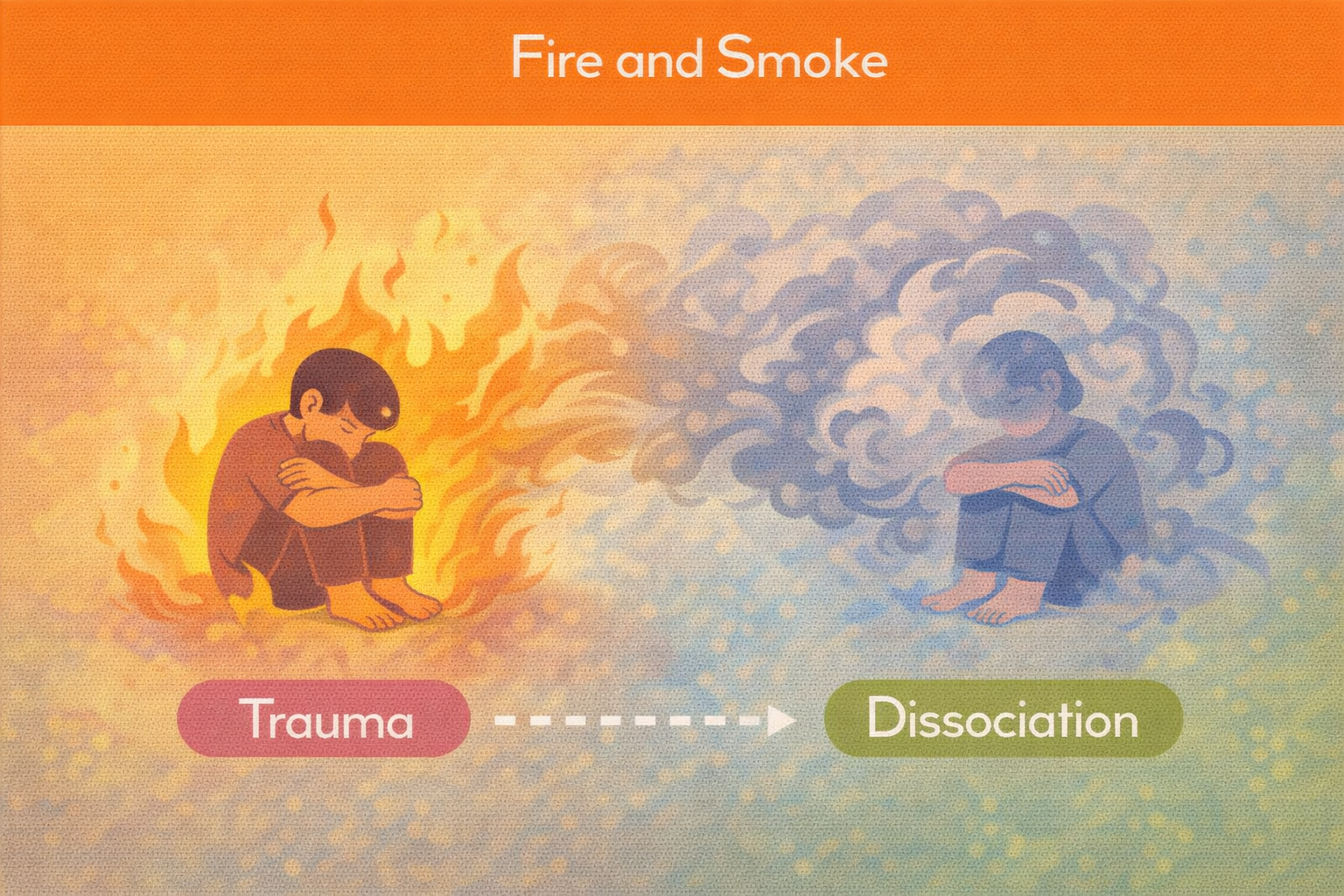
Fire and Smoke
Trauma — a term that many of you have likely heard at least once in your life. It’s often used loosely across different generations and has become a common language choice to convey intense emotions.
However, trauma is not just a set of events that happen to someone. It is not merely a past incident; trauma carries with it all the associated feelings, sensations, and thoughts. Trauma holds what is known as "feeling memory."
Trauma typically originates in childhood, as it takes very little for children to be affected by their environment. It may result from abuse, sexual assault, natural disasters, accidents, and other overwhelming experiences.
Trauma leaves behind a living legacy in the form of triggers. These triggers activate the feeling memory in the present moment, making you feel stuck and relive fear, anxiety, or grief as though it’s happening all over again. For some, this can appear as a sudden episode; for others, it becomes a prolonged way of living.
When triggered, the brain sends a powerful message: “You are dying.” This may have been true during the original traumatic event, but the brain fails to register the current reality. The same alarm system is triggered, unable to distinguish between an actual threat and an intense emotional response. It does not differentiate between extreme anxiety and actual danger.
Our nervous system becomes overwhelmed by these alarm messages and responds by flooding the body with intense sensations. Over time, trauma conditions the nervous system to swing between highs and lows automatically, which causes the body to react differently to each trigger.
As complex and exhausting as it seems, trauma can be simply defined as an overwhelming emotional response to a horrific event. Naturally, in an effort to protect us from these overwhelming feelings and sensations, our nervous system activates defense mechanisms to reduce mental and physical pain.
Dissociation is one such involuntary survival response — an integral part of our fight-or-flight system. It is the brain’s way of protecting us from reliving trauma. Dissociation acts as a cover, offering temporary relief from intense emotional and physical sensations.
It can manifest as a disconnection from one’s present thoughts, feelings, body, actions, or surroundings. Among trauma survivors, dissociation is one of the most common coping mechanisms. But if dissociation is meant to help, when does it become a concern that requires treatment?
Dissociation can show up in many different ways: zoning out, daydreaming, substance use, doom scrolling, emotional eating, excessive sleep, feeling disconnected from the body, experiencing out-of-body sensations, emotional numbness, forgetting personal events or information, difficulty with one’s identity, or experiencing multiple identities — as seen in Dissociative Identity Disorder.
Dissociation can delay trauma recovery and hinder everyday functioning. When this happens, it's a sign that you may need professional help to address trauma symptoms.
Dissociation is not a term used to pathologize trauma responses. Rather, it gives a name to the emotionally exhausting and often invisible experiences faced by trauma survivors.
If trauma is the fire, then dissociation is the smoke — the smoke that signals danger and demands attention. Smoke cannot be cleared without tending to the fire.