

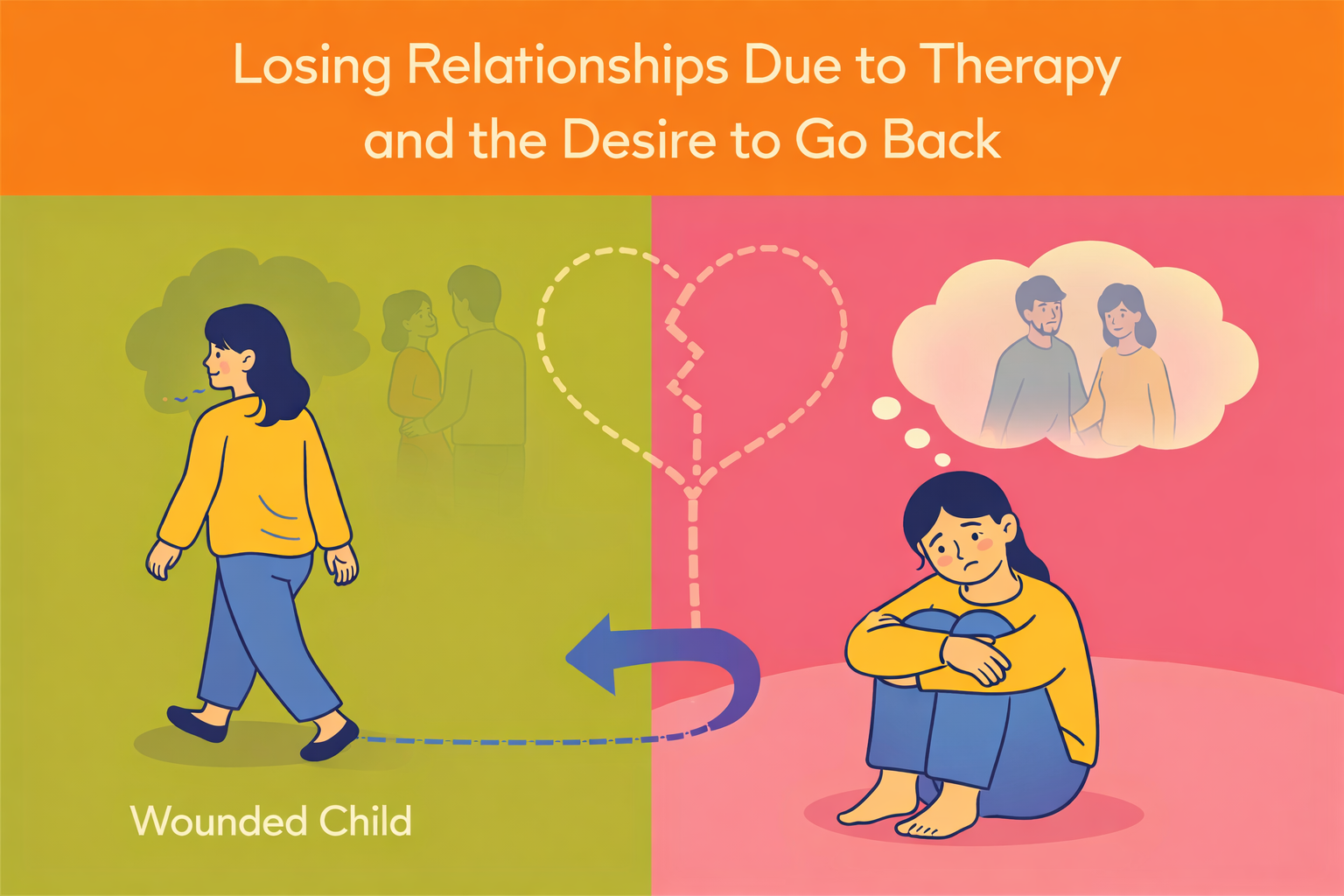
Losing Relationships due to Therapy and the Desire to Go Back
When people talk about therapy, they often describe it as a journey of healing and self-discovery. Yet, what remains unsaid are the experiences of unexpected losses for many people. One of the quieter truths of therapy is that gaining clarity can sometimes mean losing closeness to certain people. As individuals begin to see themselves and their relationships more clearly, they may notice dynamics that no longer feel balanced or emotionally safe. This awareness can lead to distance, conflict, or even the end of relationships that once felt secure.
While this experience can be deeply painful, it is not unusual and is, in fact, a natural part of the healing process. Therapy encourages self-awareness as it helps people identify patterns, emotional triggers, and long-held coping strategies which could have been maladaptive. As insight grows, so does the ability to recognise how those patterns play out in relationships. Instances could be that perhaps a person realises they often take on the role of caretaker, where they are always offering support but rarely receiving it in return; or they may notice how some friendships rely on shared negativity, gossip, or unspoken heavy expectations. Here, what once felt like closeness may begin to reveal the emotional exhaustion lying beneath.
While this new awareness doesn’t make anyone wrong or bad, one learns to value emotional honesty, boundaries, and self-respect, leading to difficulty in being engaged in relationships that depend on self-silencing, people-pleasing, etc.
The Reason Why Others Struggle with the Change and Our Temptation to Go Back
It’s common for loved ones to react with confusion or defensiveness when someone begins to change through therapy. This is because when someone starts communicating more directly or setting healthier limits, it can unsettle the familiar balance of a relationship. If closeness once depended on self-sacrifice or emotional enmeshment, the introduction of boundaries can feel threatening as it encroaches on the ‘familiar’ behaviours. Even positive changes can trigger discomfort when they disrupt old patterns. It is also where clients often feel torn, where they can be proud of their progress but burdened by guilt or loneliness.
So, when those around you pull away, it can create a powerful urge to return to familiar dynamics, and this desire is completely understandable. The familiar, even when painful, can feel safer than the uncertainty of change. While previously we may have been more accepted, more included, and less questioned, returning to old patterns such as saying yes when you mean no, ignoring your needs, and avoiding hard truths comes at a personal cost.
The longing to go back isn’t usually about the past relationships themselves, but it’s about missing the sense of belonging that those dynamics once provided. So, recognising this can help soften self-judgment and reframe the conflict as part of the healing process rather than a setback.
The process of therapy often involves cultivating differentiation, which is the ability to maintain your sense of self while remaining connected to others. Early in therapy, people often move between extremes: either merging with others and losing themselves, or withdrawing completely to preserve authenticity. However, with time and support, they learn to hold both truths that: I can be myself and still stay connected.
However, not all relationships can make this transition. Some friendships or family bonds may have been built on unspoken agreements that one person would always accommodate the other. When that agreement changes, the relationship may falter, and it’s important to note that this isn’t a sign of failure, but that it simply means that certain relationships were tied to a part of you that no longer carries the weight of maintaining the relationship at the cost of oneself.
So, how do we navigate the loneliness of growth?
While losing connections during therapy can feel isolating, that isolation can often create space for something more supportive to emerge. The following points may help in navigating this stage:
- Acknowledge the Grief - Growth and loss can coexist. It’s normal to feel sadness, guilt, or nostalgia for relationships that no longer fit and grieving them honours what they once meant.
- Avoid Self-Blame - Changing how you relate to others doesn’t make you difficult or selfish. It means you are learning to relate more honestly and sustainably, which truly aligns with you.
- Redefine Connections - While new relationships may take time, they can often form on stronger foundations such as mutual respect, empathy, and shared values, owing to the awareness of what we need/ and want and what we don’t.
- Stay Patient with the Process - Healing isn’t linear, and while in the moment it may feel permanent, it’s important to know that the discomfort of this stage is temporary.
Eventually, as therapy continues, many people find a deeper kind of understanding which doesn’t depend on approval or familiarity. They discover relationships that feel reciprocal and grounding, rather than draining.
To reiterate, losing unsupportive connections due to therapy doesn’t mean something has gone wrong. It often means something is finally going right. So, while growth can be lonely, it is also freeing. And in the end, the goal is to move forward into relationships that honour both who you are and who you are becoming.